LOS pricing model

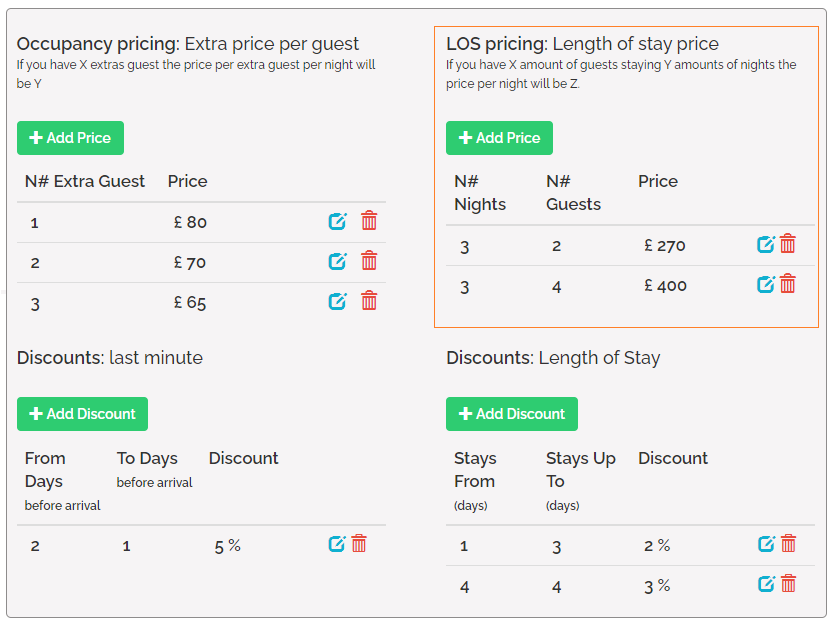
Sales Channel supports LOS pricing. If you use LOS pricing model, it will be fully sent to Sales Channel.
FSP pricing model
Sales Channel supports FSP pricing. If you use FSP pricing model, it will be fully sent to Sales Channel.
Daily price model
Daily price
Daily price is the standard way of setting prices. It indicates the base price per night for the Standard number of guests. It also constitutes the basis for the Daily price model. Note, however, that the Daily price value which is eventually available for the potential guest depends on the data introduced in the following fields:
-
Standard number of guests,
-
Extra guest price or Occupancy pricing,
-
Weekend pricing.
Standard number of guests
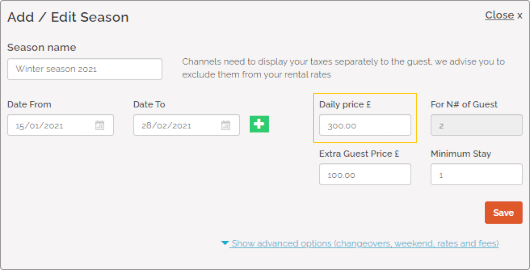
Standard number of guests refers to the maximum number of guests included in the Daily price for whom the price does not change. If more guests than specified book a stay, the extra guests will be charged with the price set in the Extra guest price element.
Extra guest price
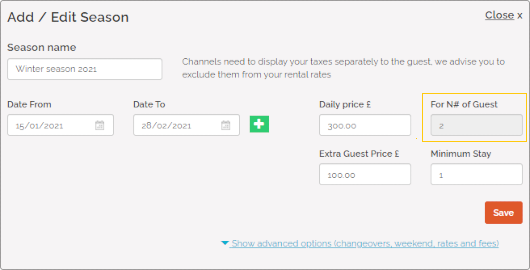
Extra guest price is the price for guests that are not included in the Standard number of guests. In other words, if the overall number of guests exceeds the Standard number of guests, Extra guest price is applied for each guest above the specified standard.
Minimum stay
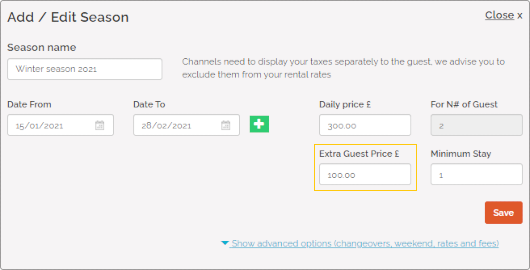
Minimum stay indicates the minimum number of days a reservation can be made for. Guests will be not be able to book your property if they want to book stays shorter than minim stay. This value is mandatory to provide. The Minimum stay value is used for the availability check.

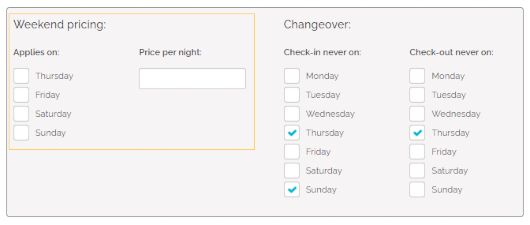
Weekend pricing
Weekend pricing refers to a specific type of pricing rules that are applied on selected weekend days only. If the weekend-specific pricing is set and the reservation matches specified criteria, then the Weekend pricing will be applied instead of the Daily price.
Occupancy pricing
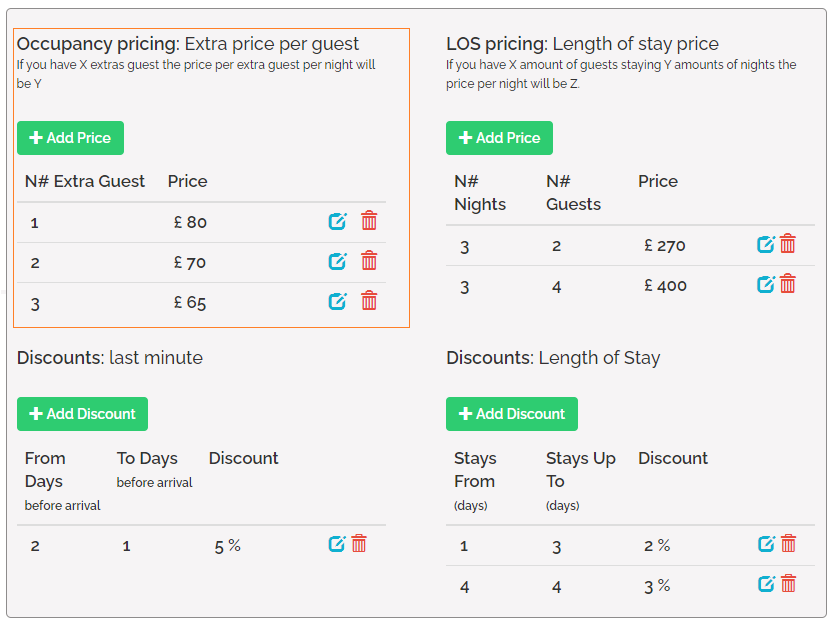
In Occupancy pricing, it is possible to specify pricing plans for different numbers of guests. The difference between Extra guest price and Occupancy pricing lies in fact that with Extra guest price the same price is applied for each extra guest. On the other hand, in Occupancy pricing it is perfectly possible to specify different prices for different numbers of guests. Note that Occupancy pricing takes precedence over Extra guest price.
Complimentary topics
Discounts
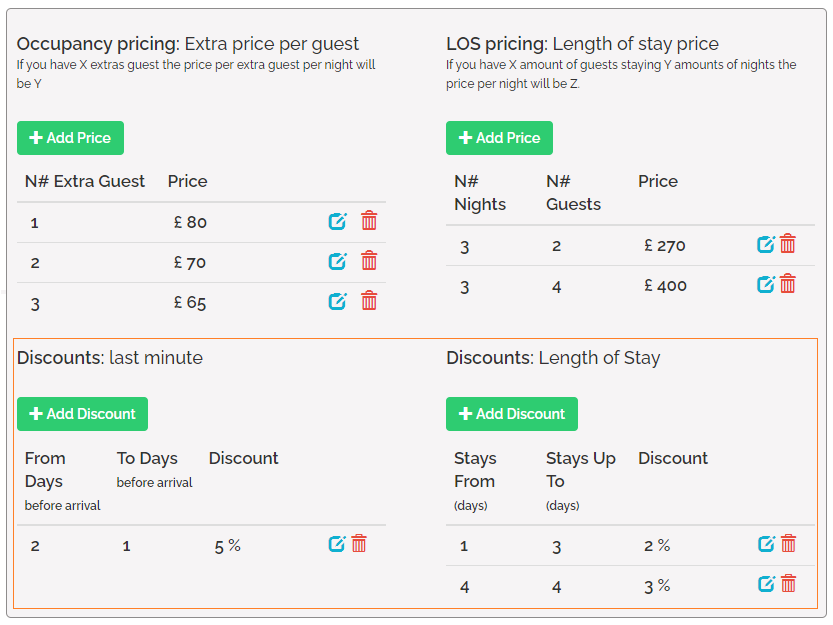
Discounts are applied in order to deduct certain amount from the price, provided the specified requirements are met by the reservation. Currently, there are two types of discounts:
LOS discount may be applied when criteria specified for the length of stay are met. For example, LOS discount may apply only for 3-days stays. Last-minute discount on the other hand is applied if the reservation is made within the specified time before the check-in day.
Calendar
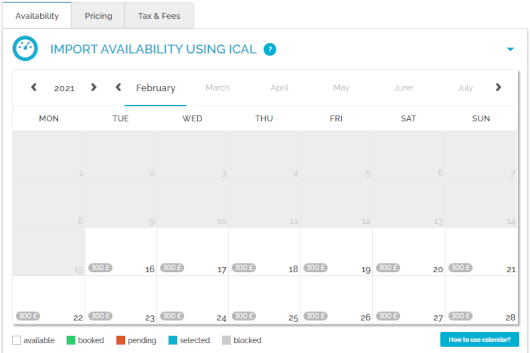
Calendar stands for the property's availability to rent. You can check here the availability of your property in the selected time frames. Once a reservation is inserted in Rentals United, the availability in the calendar gets blocked for this period. The calendar is updated automatically every time the availability of the property changes or at predefined times to remain up-to-date.
In case of Google, Rentals United sends availability for maximum 12 months.
Preparation Time Before Arrival
PTBA stands for Preparation Time Before Arrival. It is a general keyword to describe the minimum time a booking has to be made in advance in order to be accepted by the PM. The dates restricted by PTBA are normally set as not available already in the calendar. Hence, the PTBA data is already applied in availability and sent to the channel within the ARI data.
The PTBA in Rentals United blocks the availability x hours from 23:59 of the day of arrival on the property's local timezone. For example if the PTBA is set to 6 hours, bookings will be accepted until 18:00 of the day of arrival, after 18:00 the calendar will be closed. If the PTBA is set to 24 hours, bookings will be accepted until 23:59 before the day of arrival, after that the calendar will be closed.
In case of Google Travel, the PTBA-blocked period is already shared with the channel within the property's calendar. Hence, the time restricted by PTBA are set to unavailable to book.

For detailed description of how PTBA works, please see Rentals United: User Guide.
Changeover restrictions
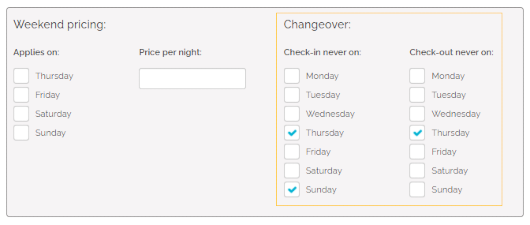
Changeover restrictions specify whether check-in or check-out is allowed for a given day. This is a great option if you need the guests checking in and out to fit your schedule and it will help you avoid unexpected guests. If some days are restricted from changeovers, then your guests will simply not be able to select such a stay if the start or end day falls on a changeover-restricted day.
Tax
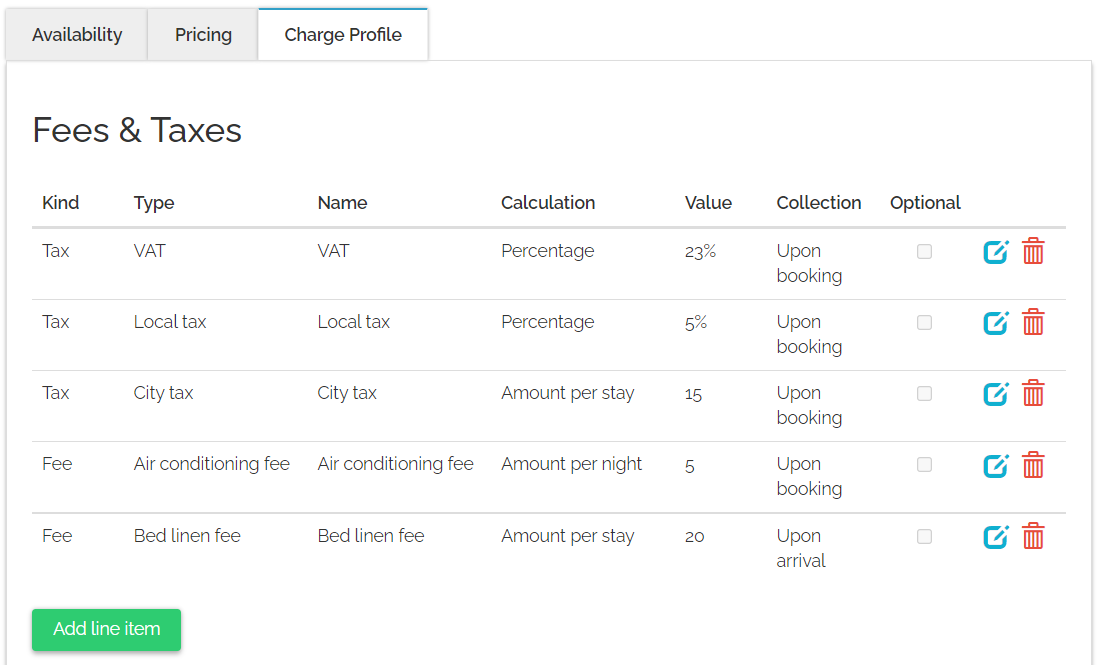
Tax refers to mandatory charges legally levied on particular types of goods, services and transactions, paid as a contribution to the state’s revenue, for example VAT or city tax.
Fee
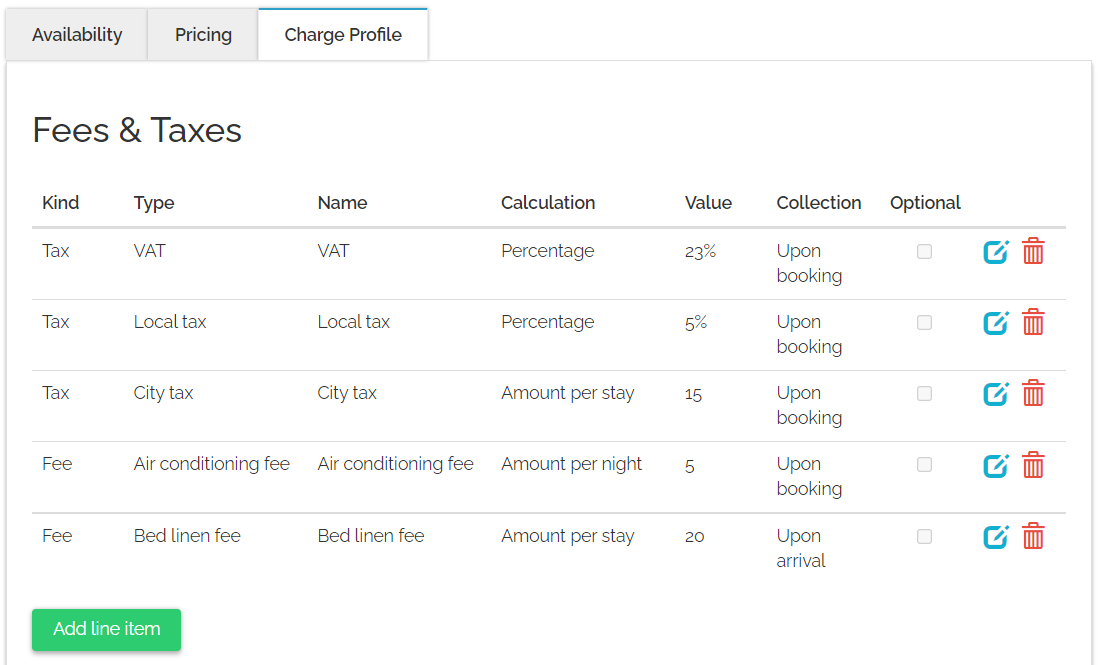
Fee refers to mandatory or optional charges paid in exchange for particular services. These include:Charges for additional services, for example Internet access or shuttle.
Fees defined by local governments that do not fall into the tax category, for example environmental fees.
Down payment (N/A)
Security deposit (N/A)
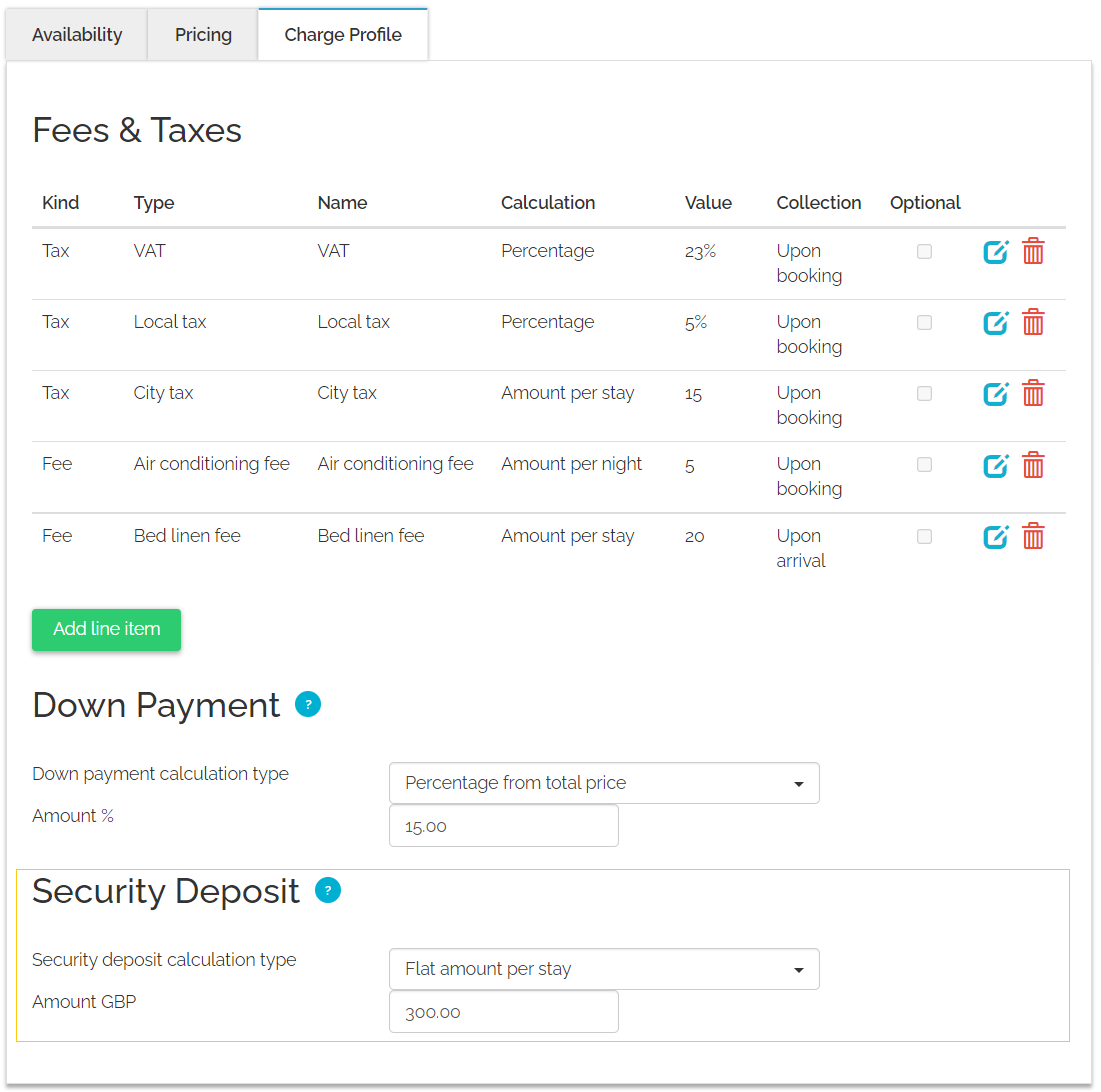
Security deposit is a mandatory or optional refundable charge the guest needs to pay to cover for potential property damages.
Currency
Currency in Rentals United is a fixed value, by default established on the basis of the property location. The currency of any property can be checked in Rentals United, go to Step 5: Price and availability after selecting All properties tab.
Prices are sent to Google Travel in the same currency as they are in Rentals United system. Bookings are received in the same currency as the one which is sent.